
Root Wall Barriers: The Quiet Fix Protecting Houston Foundations
Tree roots do not advertise their presence until something breaks. By the time a sidewalk buckles, a drainage line backs up, or a foundation crack appears, the root system responsible has typically been growing into that space for years. Root wall barriers are one of the most practical and underutilized tools in urban tree management, and for Houston-area property owners dealing with clay-heavy soil and established tree canopy, they deserve far more attention than they usually get.
What Are Root Wall Barriers and How Do They Work?
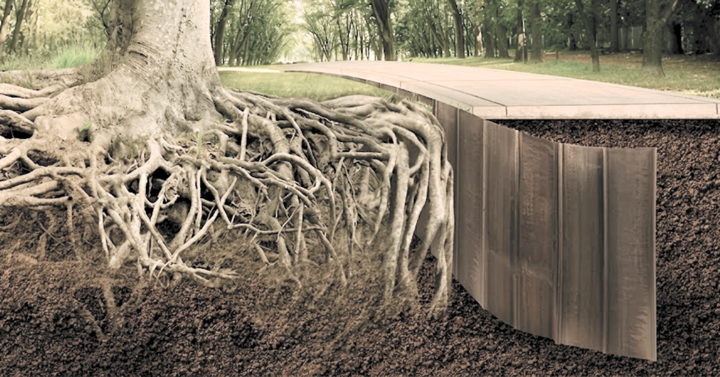
A root wall barrier is a physical or chemical boundary installed in the soil to redirect tree root growth away from structures, paving, utilities, or other sensitive areas. Physical barriers are the most commonly used type in residential and commercial applications. They are typically made from high-density polyethylene (HDPE) panels installed vertically in the soil at depths ranging from 18 to 36 inches depending on the species and site conditions. The panels redirect roots downward or outward rather than allowing them to grow horizontally toward the target structure.
Chemical barriers work differently, using slow-release herbicidal compounds embedded in a permeable fabric that inhibit root growth at the treated zone without harming the tree above ground. These are sometimes used in situations where excavation for a physical barrier would itself cause too much root damage or soil disruption.
According to the University of California Cooperative Extension, properly installed root barriers have been shown to redirect root growth effectively for 15 to 20 years when matched to species growth rates and installed at the correct depth
Why Is Root Intrusion Such a Common Problem in Houston?
Houston's expansive clay soils create a specific root behavior pattern. During dry periods, clay contracts and opens lateral pathways through the soil. During wet periods, it expands and closes them. Tree roots exploit those pathways as they develop, consistently migrating toward moisture and organic matter. Plumbing joints, foundation slab edges, and sidewalk seams all represent exactly the kind of micro-environment that roots are drawn to.
The Greater Houston area also has a high density of mature trees in established neighborhoods, and those root systems have had decades to extend well beyond the tree's canopy drip line. The general rule in arboriculture is that a tree's root system extends two to three times the radius of its crown, which means a large oak with a 30-foot canopy spread may have roots extending 60 to 90 feet from the trunk (source: isa-arbor.com).
When Should You Install a Root Barrier Wall?
The most effective time to install root wall barriers is before damage occurs. If you are planting a new tree near a sidewalk, driveway, or foundation, a barrier installed at the time of planting costs a fraction of what reactive repairs will cost later. For existing trees near structures showing early signs of root pressure such as lifting pavement sections, slight foundation cracking, or slow drainage without a clear plumbing cause, barrier installation is still viable but requires careful assessment of the existing root layout to avoid causing additional damage during excavation.
What Does Professional Root Barrier Installation Involve?
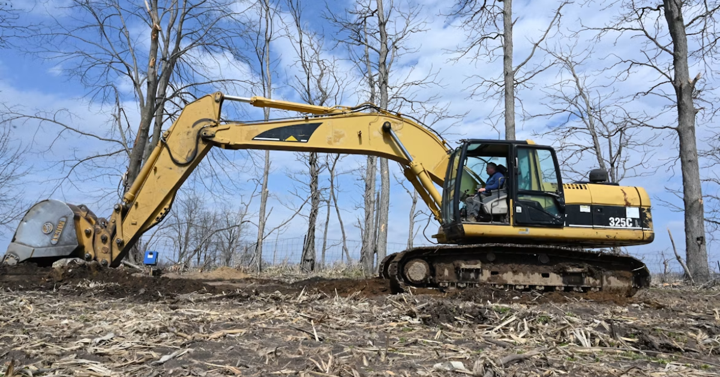
The installation process starts with a site assessment to map the root zone, identify the target structures at risk, and determine the appropriate barrier depth and material. Excavation follows, typically using a trenching machine or hand excavation near sensitive root zones. Barrier panels are installed vertically, overlapped at joints, and backfilled in compacted lifts to prevent settling. The surface is then restored to match the existing grade and hardscape.
For properties near mature trees in Houston's inner and near-loop neighborhoods, access constraints and root sensitivity often require hand-digging methods that take longer but protect the tree's structural root system in the process.
Read our related post on land clearing and site preparation for context on how root management fits into broader property maintenance planning.
How Does The Lone Star Tree Czar Handle Root Barrier Work?
We approach root barrier installation the same way we approach every job: site assessment first, fixed-scope quote second, clean execution third. Our team understands the relationship between Houston's soil conditions and root behavior, and we select barrier depth and material based on the specific species and site rather than a standard template.
If you have a mature tree near a foundation, driveway, or plumbing line and have noticed early signs of pressure, do not wait for the damage to become structural.
Root Barriers Done Right: What the Lone Star Tree Czar Delivers
Root problems do not fix themselves, and the cost of reactive repair almost always exceeds what proactive barrier installation would have cost. Root wall barriers, properly selected and installed by a crew that understands Houston's soil and root behavior, are a sound investment for any property with mature trees near sensitive structures.
Visit The Lone Star Treeczar or call our team to discuss your site and get a clear, honest assessment of what root management makes sense for your property.
Frequently Asked Questions
What are root wall barriers and why are they used?
Root wall barriers are physical or chemical boundaries installed in the soil to redirect tree root growth away from structures, utilities, and paving. They are used to prevent costly foundation damage, cracked sidewalks, and plumbing intrusions caused by expanding root systems in urban and suburban settings.
How deep should a root barrier be installed in Houston soil?
Depth depends on the tree species and the target structure. In Houston's clay-heavy soils, barriers are typically installed between 18 and 36 inches. Species with aggressive lateral root systems like live oak or Chinese tallow may require the deeper end of that range for effective long-term deflection.
Will a root barrier harm my tree?
A properly installed physical root barrier does not harm the tree. It redirects root growth without damaging the root system above the barrier. Chemical barriers can affect feeder roots in the treated zone, so placement and species compatibility must be assessed carefully before this method is used.
How long do root wall barriers last?
High-density polyethylene physical barriers typically remain effective for 15 to 20 years when installed correctly. Longevity depends on soil conditions, root pressure from the specific species, and whether the barrier was installed at the appropriate depth for the growth pattern of the tree involved.
Can root barriers be installed near existing mature trees?
Yes, but installation near mature trees requires careful planning to avoid cutting structural roots during excavation. Our team assesses the existing root layout before installation begins, using hand excavation near the root zone where necessary to protect the tree's structural integrity throughout the process.